Your refrigerator is running fine. Your TV powers on without issue. Your microwave heats food exactly like it always has. But six months from now, one of them is going to fail without warning, and the cause was something that happened this past winter during a windstorm you barely noticed. That is how surge damage works. It does not always announce itself with a tripped breaker or a blown fuse. It chips away at the internal components of your appliances, shortening a 12-year lifespan to 6, or causing a circuit board to fail on an otherwise healthy unit.
Most homeowners associate electrical surges with lightning strikes, and while those are the most dramatic cause, they account for fewer than 20 percent of all surge events inside a residential home. The surges doing the most damage are small, repetitive, and generated from inside the house itself. Understanding where they come from and what they are doing to your electronics is the first step toward protecting what you already own.
What Is Actually Happening Inside Your Home's Electrical System
Every appliance and electronic device in your home is designed to operate within a specific voltage range. In the United States, standard household circuits run at 120 volts. Most devices can tolerate minor fluctuations within a band of roughly 5 to 10 percent above or below that rating. A surge is any spike in voltage that exceeds that tolerance, even briefly.
The damage is not always catastrophic. A single large surge, like one from a nearby lightning strike, can kill a device instantly. But the more common pattern involves dozens or hundreds of small surges, sometimes as low as a few extra volts above rated capacity, occurring repeatedly over months or years. Each one degrades the insulation around internal wiring, stresses capacitors, and weakens the logic boards inside your devices. Engineers refer to this as cumulative degradation, and it is responsible for the majority of premature appliance failures that homeowners attribute to age or bad luck.
Internal switching surges are the leading cause in most homes. Every time a large motor-driven appliance like a refrigerator compressor, air conditioner, washing machine, or garage door opener cycles on or off, it creates a brief voltage disturbance on the circuit. These are small individually, but in a home where the refrigerator compressor cycles 8 to 12 times per hour, the cumulative stress on nearby devices adds up quickly.
Utility line disturbances account for a significant portion of damaging surges as well. Grid switching events, transformer issues, and power restoration after an outage all send abnormal voltage pulses down the line and into your panel. In areas like Toledo, Washington, where the grid serves a mix of rural and suburban loads with seasonal demand swings, utility-sourced disturbances are more frequent than in densely urban service territories.
Lightning-induced surges do not require a direct strike to cause damage. A strike within a quarter mile of your home can induce a surge through overhead power lines, cable or satellite lines, and even telephone lines. The Pacific Northwest sees concentrated thunderstorm activity between May and September, and those months correspond with a notable increase in unexplained electronics failures in the region.
WARNING: If you experience a surge event and notice any outlets that feel warm to the touch, smell burning plastic or a faint electrical odor near your panel, or hear buzzing from your walls, stop using those circuits and call a licensed electrician before restoring power to those areas. These signs indicate potential arc damage inside your wiring, which is a fire hazard.
How to Read the Damage Before a Device Fails
The pattern of failure is usually the first diagnostic clue. A device that dies suddenly after a storm is an obvious candidate for surge damage. But the harder cases to catch are gradual ones.
TIP: Plug a simple surge indicator or UPS (uninterruptible power supply) with a built-in event log into your home office circuit or entertainment center for 30 days. Many units under $60 will record the number and severity of voltage events. This gives you real data about what your specific circuits are experiencing, which is far more useful than guessing.
| What You're Seeing | Most Likely Cause | Severity | First Step to Take |
|---|---|---|---|
| TV powers on but display flickers intermittently | Capacitor degradation from cumulative surges | Medium | Test on a different outlet; schedule inspection of home surge protection |
| Refrigerator compressor runs constantly | Internal control board stress from switching surges | High | Check refrigerator age; have an electrician test dedicated circuit voltage |
| Microwave stops mid-cycle or runs at reduced power | Power supply component failure from surge exposure | Medium | Check if microwave is on a shared circuit with large appliances |
| Router or modem fails repeatedly within 1 to 2 years | No coaxial or data line protection paired with power surge protection | Medium | Add whole-home surge protection with data line coverage |
| Smart home devices reset or lose settings unprompted | Low-level voltage instability on circuit | Low to Medium | Verify all smart devices are on surge-protected outlets; test outlet voltage |
| HVAC control board fails before system age warrants it | Internal switching surges from motor cycling without panel-level protection | High | Have electrician inspect panel-level surge protection and HVAC wiring |
| Appliance trips breaker repeatedly with no clear cause | Damaged internal components drawing inconsistent current after surge | High | Do not reset repeatedly; have circuit and appliance inspected |
| LED lights flicker or burn out unusually fast | Voltage instability on circuit, often from shared loads | Low | Test with different bulbs; if pattern persists, test circuit voltage |
| Gaming console or desktop computer fails within 3 years | No point-of-use surge protection, or protection strip is past its rated joule capacity | Medium | Replace surge strips older than 3 years; consider UPS for high-value equipment |
| Garage door opener circuit board fails | Switching surges from motor combined with no dedicated surge protection | Medium | Install point-of-use protector at opener; check panel surge device status |
How We Diagnose Surge-Related Damage in the Field
On service calls involving suspected surge damage, we follow a consistent diagnostic sequence before making any recommendations. The first tool we reach for is a digital multimeter to verify that resting voltage at the outlet is within the acceptable range of 114 to 126 volts. A reading outside that window tells us the problem is ongoing, not historical.
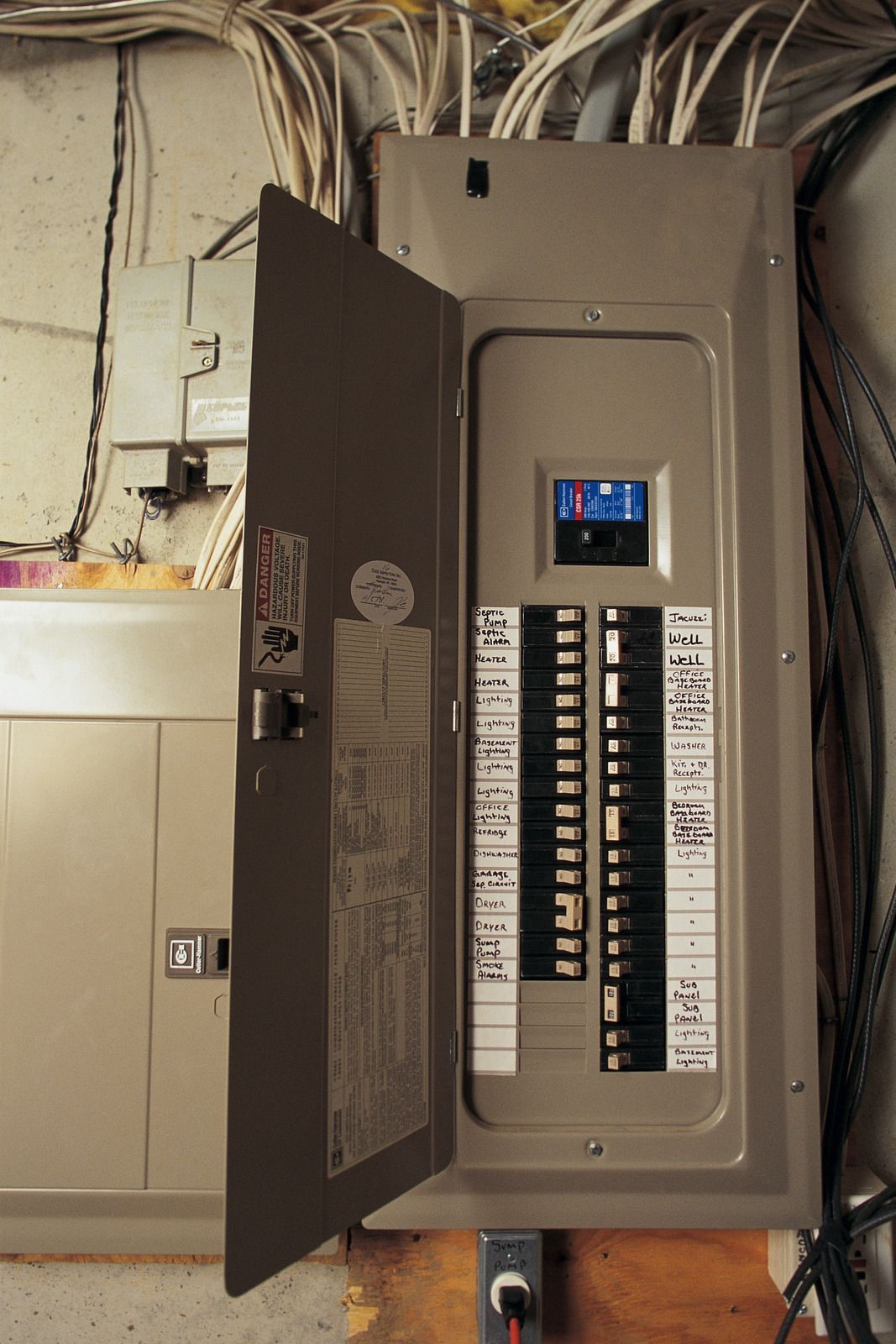
From there, we pull the panel cover and inspect the condition of the main surge protection device if one is installed. Whole-home surge protectors have indicator lights and sacrificial components called metal oxide varistors, or MOVs, that absorb surge energy and degrade over time. We frequently find units that were installed once and never checked again, with MOVs that have been fully consumed and are providing zero protection. Per industry standards, a whole-home surge device should be inspected annually and replaced every 5 to 10 years depending on the number of surge events recorded or estimated.
We also check for proper grounding throughout the system. A poorly grounded panel or individual circuit dramatically increases the damage potential from any surge event. In older homes in the Toledo, Washington area, grounding conductors are sometimes undersized or improperly bonded, which is a code issue that compounds surge vulnerability significantly.
The final step is testing circuits that serve high-value or motor-driven loads with a power quality monitor over a 24 to 48 hour window. This captures the actual switching surge profile of the home and tells us where the worst offenders are.
Trusted Electrical Surge Experts Serving Toledo Homes
The core truth about surge damage is that you rarely see it happening, and you usually only confirm it after the damage is done. In the Toledo, Washington area, the combination of seasonal storm activity, rural grid characteristics, and the aging housing stock in parts of Pacific County means the conditions for recurring surge events are present most of the year. Homes without layered protection are not a question of whether they will experience damaging surges but how frequently.
CRU Electric has been diagnosing and resolving
electrical surge issues for Toledo-area homeowners for 16 years. We install whole-home surge protection, assess panel grounding, test circuit voltage, and identify the internal switching patterns that are quietly shortening the life of your appliances. Contact us to schedule a surge protection assessment before the next storm season arrives.
Frequently Asked Questions
How do I know if my appliances were damaged by a surge if they still turn on?
The most common signs are gradual performance loss, more frequent cycling, or longer task completion times. Surge damage degrades internal components slowly. Confirming it before total failure requires a professional inspection or monitoring the circuit with a power quality meter over several weeks.
Does homeowners insurance cover surge damage to appliances and electronics?
Coverage depends on your policy and the surge cause. Lightning strike damage is covered under most standard policies with documentation. Internal switching surges or utility disturbances are rarely covered since insurers classify them as gradual wear. Review your electronics coverage and consider a rider for high-value devices.
What is the difference between a surge protector and a whole-home surge device?
A point-of-use surge protector covers only devices plugged directly into it. A whole-home device installs at your main panel and intercepts large surges before they reach any circuit. Both protect against different event types and work best when used together rather than as standalone solutions.
Are older homes in the Toledo, Washington area more vulnerable to surge damage?
Homes built before the mid-1980s typically lack properly bonded grounding conductors and have panels not designed for surge protection devices. Both factors increase damage potential from any voltage spike. If your home predates 1990 and has never had a surge assessment, schedule one before fall storm season.
Can I install whole-home surge protection myself?
Installing the device requires working inside a live main panel, where main service conductors remain energized even with the breaker off. Electrocution risk is serious. Washington State electrical code requires a licensed electrician for all panel work, making this one repair that legally cannot be a DIY project.