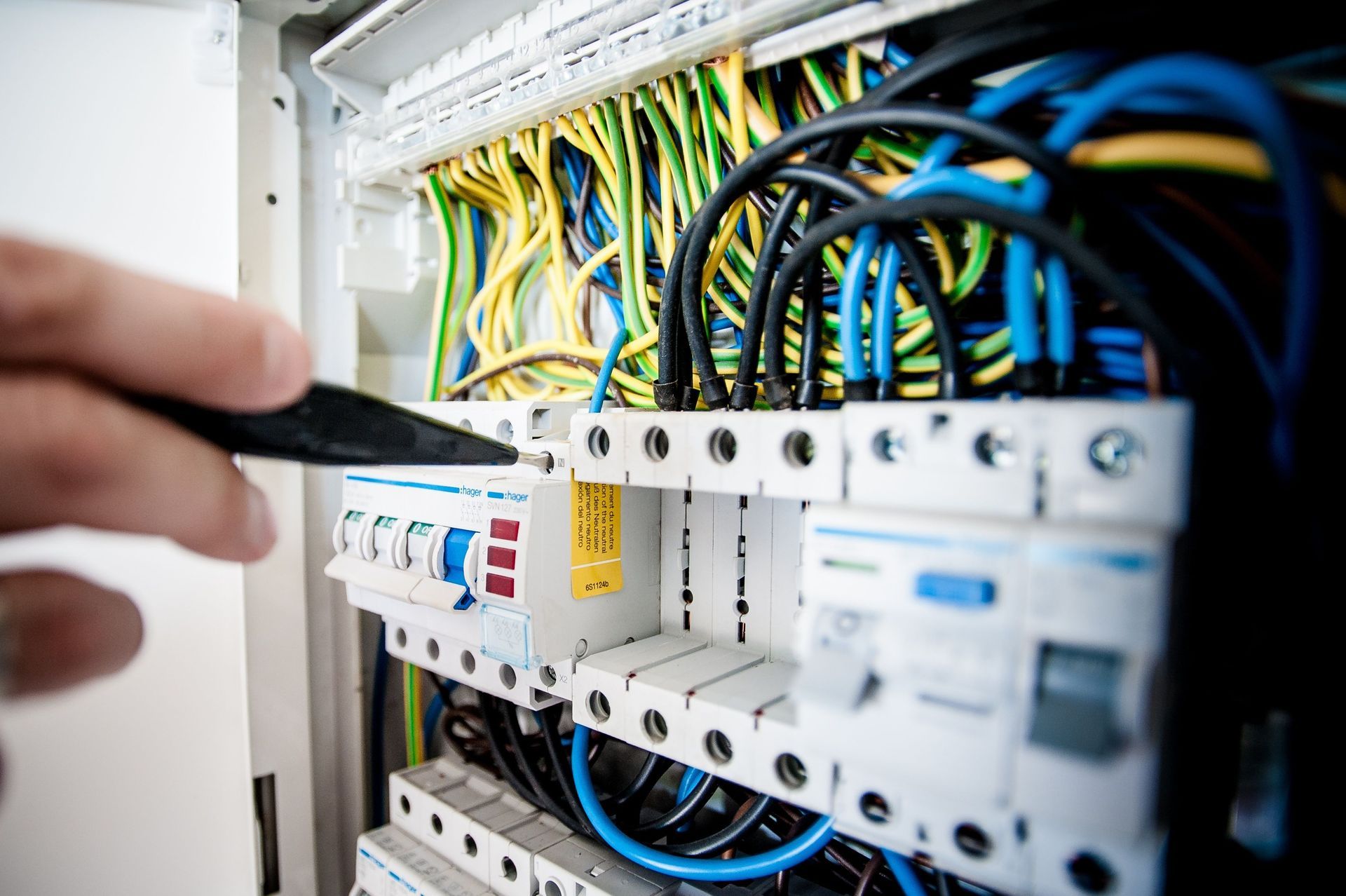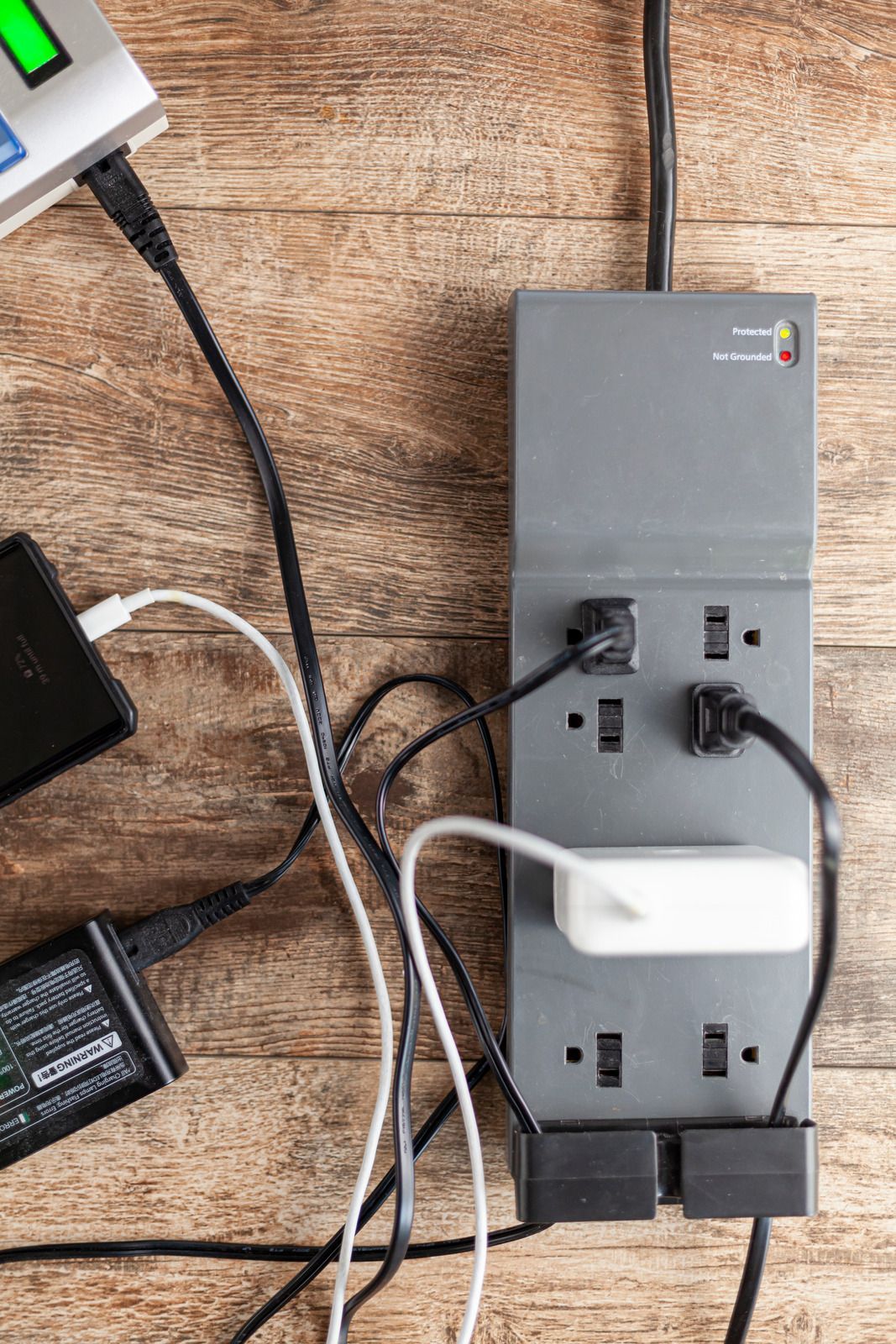
QUICK ANSWER: Most homes built before the 1990s were wired with 60 to 100 amp panels sized for a handful of lights and small appliances. Decades later, those same panels are running kitchens full of electronics, workshops, hot tubs, EV chargers, and backup generators. If your breakers trip during ordinary daily use, your panel is telling you it's maxed out — and in older rural homes, that ceiling tends to show up sooner than people expect.
Walk into the utility closet or garage of a farmhouse outside Toledo, or a mid-century house in Chehalis, and you'll usually find the same thing: a metal box that hasn't been touched in decades, still doing its best to keep the lights on. For years it worked fine. Then a few appliances got swapped for bigger ones, a shop got wired for power tools, and now that same box trips on a random Tuesday afternoon for no obvious reason.
It isn't bad luck. It's math. Electrical demand in the average home has climbed for fifty straight years, and a lot of Southwest Washington's housing stock is still running on panels sized for a much smaller world.
How Much Power a Home Actually Needed Back Then
When many of Lewis County's older farmhouses and post-war homes went up, a family's electrical load looked nothing like it does now. A refrigerator, a washing machine, some incandescent lighting, maybe a window-unit air conditioner. That covered most of the demand. A 60 amp panel handled it without breaking a sweat, and 100 amp service felt generous for the era.
Now picture a typical household today. Central heating and cooling. An electric range. A microwave. A couple of computers and streaming gear in nearly every room. A well pump if you're on rural water. Often a second refrigerator or chest freezer sitting in the garage. None of that existed in anywhere near the same numbers when your panel went in. The wiring itself might still be sound, but the panel was never built to distribute this much load at once.
Rewiring America, a national nonprofit focused on home electrification, notes that older homes commonly carry 60 or 100 amp panels while newer construction is typically built with 200 amp service or larger. That gap only widens as households keep adding powered equipment.
Signs Your Panel Is Being Asked to Do More Than It Was Built For
You don't need a multimeter to notice when a panel is maxed out. The symptoms show up in daily life long before anything fails outright. Breakers trip when you run two appliances at once — the microwave and the toaster, say, or the hair dryer and a space heater — and one of them takes the whole circuit down with it. Lights dim or flicker the moment the well pump, the air conditioner, or some other big motor kicks on.
Panels also run out of room in a more literal sense. You've probably run out of open slots, so anything new has to double up on an existing circuit instead of getting one of its own. Maybe the panel feels warm to the touch, or you've noticed a faint buzz near it that wasn't there before. And if you've caught yourself unplugging the toaster just to run the coffee maker, that habit is worth paying attention to — it means you're already managing around a shortage, whether you've named it that or not.
Any one of these on its own might seem minor. Stack them together, though, and they point to a panel that's been quietly absorbing more demand than it was ever sized to carry.
Why Older Wiring Makes the Problem Worse
Panel capacity is only half the story. In a lot of Southwest Washington's older housing stock, the wiring behind the walls is just as dated as the panel feeding it. Aluminum branch wiring, undersized conductors, and connections that have loosened after decades of heating and cooling cycles all add strain to a system that's already stretched thin. A panel technically rated for 100 amps doesn't mean much if the wiring and connections behind it have degraded with age.
Rural properties add another layer most people don't think about. Longer runs from the meter out to outbuildings, wells, and shops mean more voltage drop and more chances for a marginal system to show its age under load. Storm season makes it worse — outages and power fluctuations happen more often out here than they do on tighter urban grids, and a panel already working near its ceiling has less room to absorb that stress without nuisance tripping or breaker wear that shows up years too early.
TIP: If you don't already know your panel's amperage, check the label inside the panel door or on the main breaker itself. It's usually stamped right on the switch. Knowing that one number gives you a real baseline before you add anything else to the system.
The Slow Creep: How Homes Quietly Outgrow Their Panels
Panels rarely get overloaded in one dramatic moment. It happens in stages, and most homeowners can trace the whole progression if they think back a few years.
The kitchen fills up first, almost every time. A second refrigerator, an air fryer, an instant-pot-style cooker, a coffee machine that pulls more than the old percolator ever did — kitchens quietly turn into one of the highest-draw rooms in the house without anyone deciding it should happen that way.
The garage or shop gets wired for real work next. A table saw, a compressor, a welder, or even just serious LED shop lighting adds load that a panel built for a couple of ceiling fixtures never saw coming.
Comfort systems get upgraded somewhere along the way, too. A window unit gets replaced with central air, or a wood stove gets backed up with electric heat, and both draw noticeably more than what they replaced. Then the recreational additions show up. A hot tub is one of the most common triggers for discovering a panel is out of room — it needs its own dedicated circuit and often more capacity than an older panel has left to give.
Electric vehicles complicate things further. Level 2 home charging pulls a steady, heavy load for hours at a stretch, which is a different kind of demand than almost anything else in a typical house. And when backup power enters the picture — a generator, portable or standby — it needs a properly integrated transfer setup, something that's far easier to plan for on a panel with room to spare than one that's already full.
No single item on that list tips a panel over the edge by itself. Stacked together over several years, they explain why a system that felt fine a decade ago now trips under everyday use.
What Chronic Overload Does to a Panel Over Time
A panel pushed near its limit for years doesn't fail gracefully. It wears down. Breakers that trip repeatedly take on more mechanical stress with each cycle, and their ability to trip correctly when it actually matters can start to slip. Connections inside an overloaded panel run hotter than they should, which speeds up the aging of insulation and terminals alike. None of this happens overnight. But it happens.
WARNING: A breaker that trips repeatedly, a panel that feels warm, or any burning smell near your electrical panel is not something to wait out. Stop using the affected circuit and have a licensed electrician inspect the system before you reset anything again. Repeated tripping is the panel telling you it's already carrying more stress than it should.
The Electrical Safety Foundation International points to arcing faults and overloaded circuits as leading contributors to home electrical fires nationally. Flickering lights and breakers that trip again and again are exactly the kind of early warning signs the group recommends acting on rather than living with for another season.
Reading the Difference Between "Old" and "Undersized"
Here's a distinction that gets lost a lot: a panel's age and a panel's capacity aren't the same problem, even though they usually show up together. A 100 amp panel installed forty years ago that's still in good physical condition, properly grounded, and feeding a modest household might have plenty of life left in it. A 100 amp panel feeding a home with a shop, a well pump, an EV, and a hot tub is a completely different situation, no matter how new that panel looks on the outside.
That's why a load evaluation matters more than a guess based on appearance. A licensed electrician can calculate what your home actually draws against what your panel and service are rated to deliver. That comparison is what tells you whether you're dealing with a capacity issue, a condition issue, or both at once.
When It's Time to Have the System Evaluated
A few situations tend to make an evaluation worth scheduling sooner rather than later. You're planning to add an EV charger, hot tub, generator, or major shop equipment. Breakers have started tripping during normal daily use, not just during an obvious overload. You bought an older home recently and have no idea about the panel's history. The panel shows visible rust, corrosion, or scorch marks, or it makes noise it didn't used to make. You're planning a renovation that's going to add a meaningful number of new circuits.
None of these mean something is guaranteed to be wrong. They mean it's a good moment to get an honest read on where your system stands before you ask more of it.
Frequently Asked Questions
Does an older panel always need to be replaced?
No. Age alone isn't the deciding factor — capacity, condition, and what the home actually demands from it matter more. Plenty of older panels in good shape, feeding modest households, still have real service life left.
Can I just add a subpanel instead of upgrading the whole system?
Sometimes, if the main service has capacity to spare. A subpanel adds circuit space but doesn't increase your home's total available power, so it only helps when your main panel and service size can support the added load.
Why do rural homes seem to have more electrical issues than homes closer to town?
Longer wire runs, older infrastructure, and more exposure to storm-related outages all play a part. Rural properties also tend to have outbuildings and wells adding load points that were never part of the original design.
Is it normal for a panel to feel slightly warm?
Not really. A panel should feel close to room temperature. Noticeable warmth, especially localized around one breaker, is worth having checked rather than shrugged off.
Your Panel's Age Tells Only Half the Story
An electrical panel that trips occasionally isn't automatically a problem, but a pattern of overload rarely fixes itself. The real story lives in the gap between what a panel was built to carry and what a household actually asks of it decades later. CRU Electric has spent 16 years evaluating panels across Toledo, WA and the surrounding area, and the pattern holds true almost everywhere: capacity issues hide in plain sight until someone finally measures the load against the wiring.
Whether that means a full panel upgrade, a subpanel, or simply peace of mind that the system still has room to grow, the answer starts with an honest look at what's behind the panel door. Older homes carry decades of quiet changes — new appliances, new habits, new demands — and a system built for a smaller era eventually shows the strain. Knowing where things stand now makes every decision that follows a lot easier.